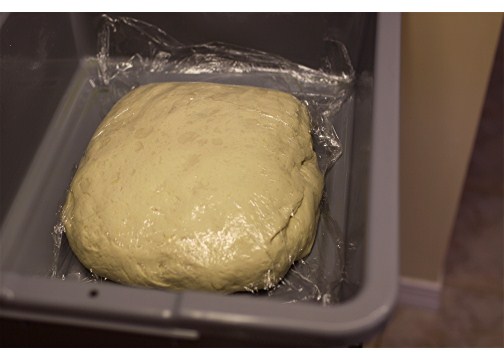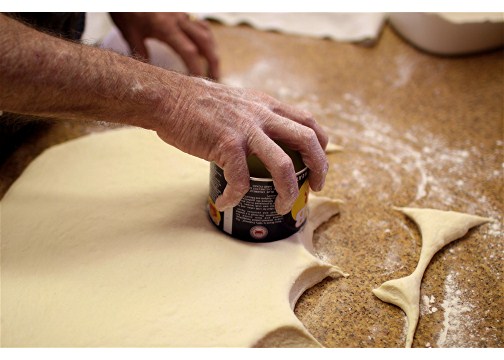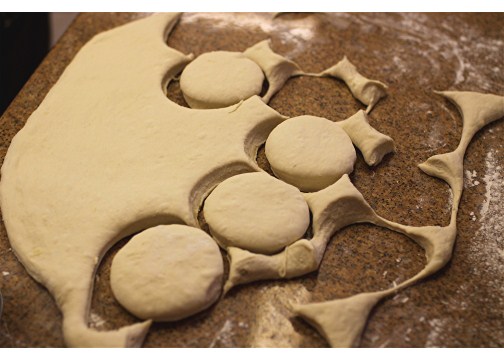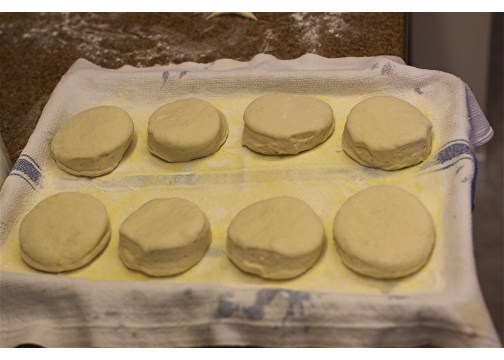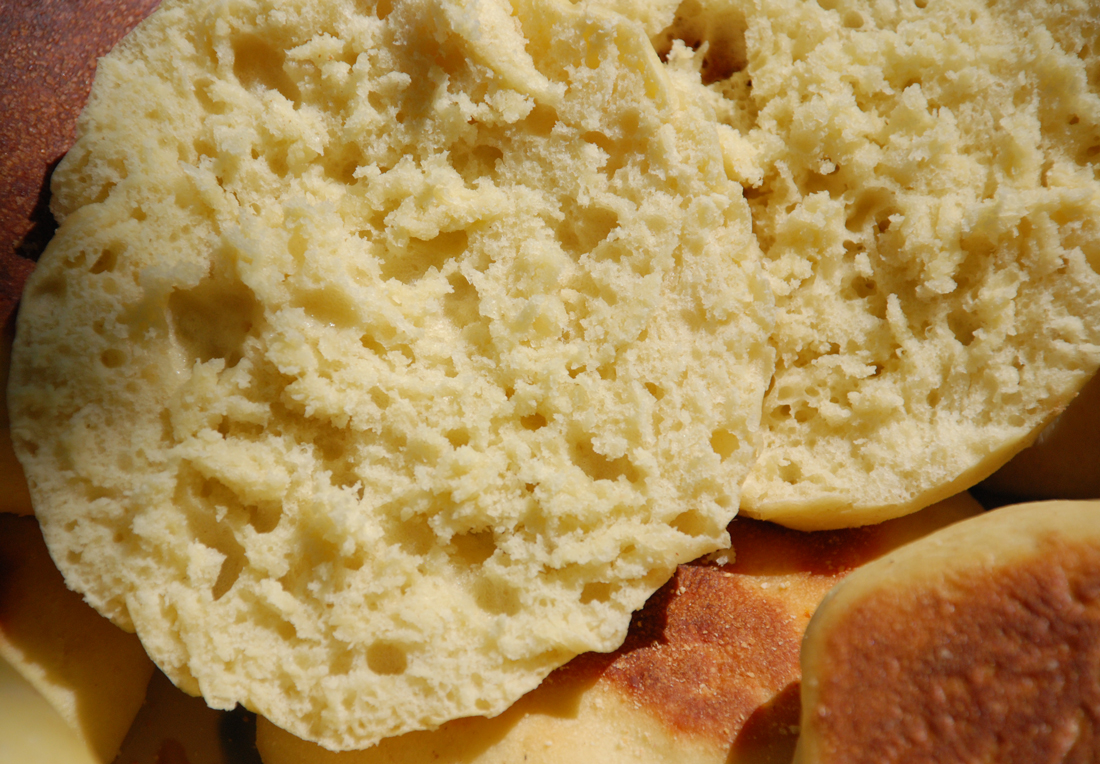
Submitted by peartree on September 13, 2008 - 12:28pm.

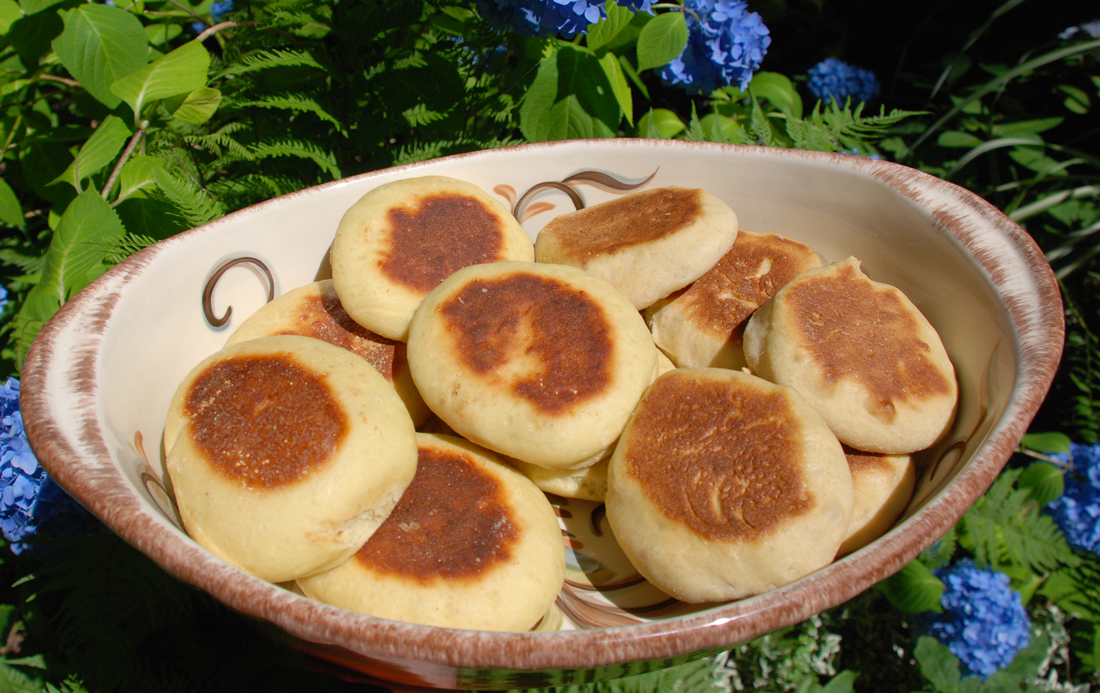
English muffins, first attempt

English muffins, first attempt


Submitted by holds99 on September 1, 2008 - 7:19am.

English Muffin Wrap-Up


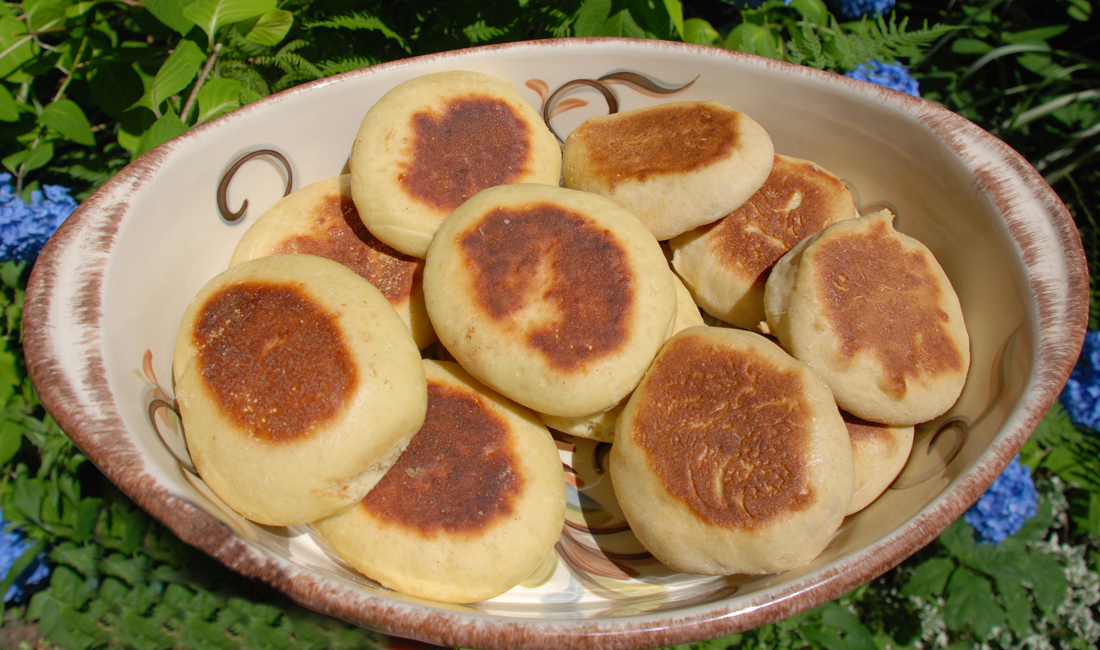
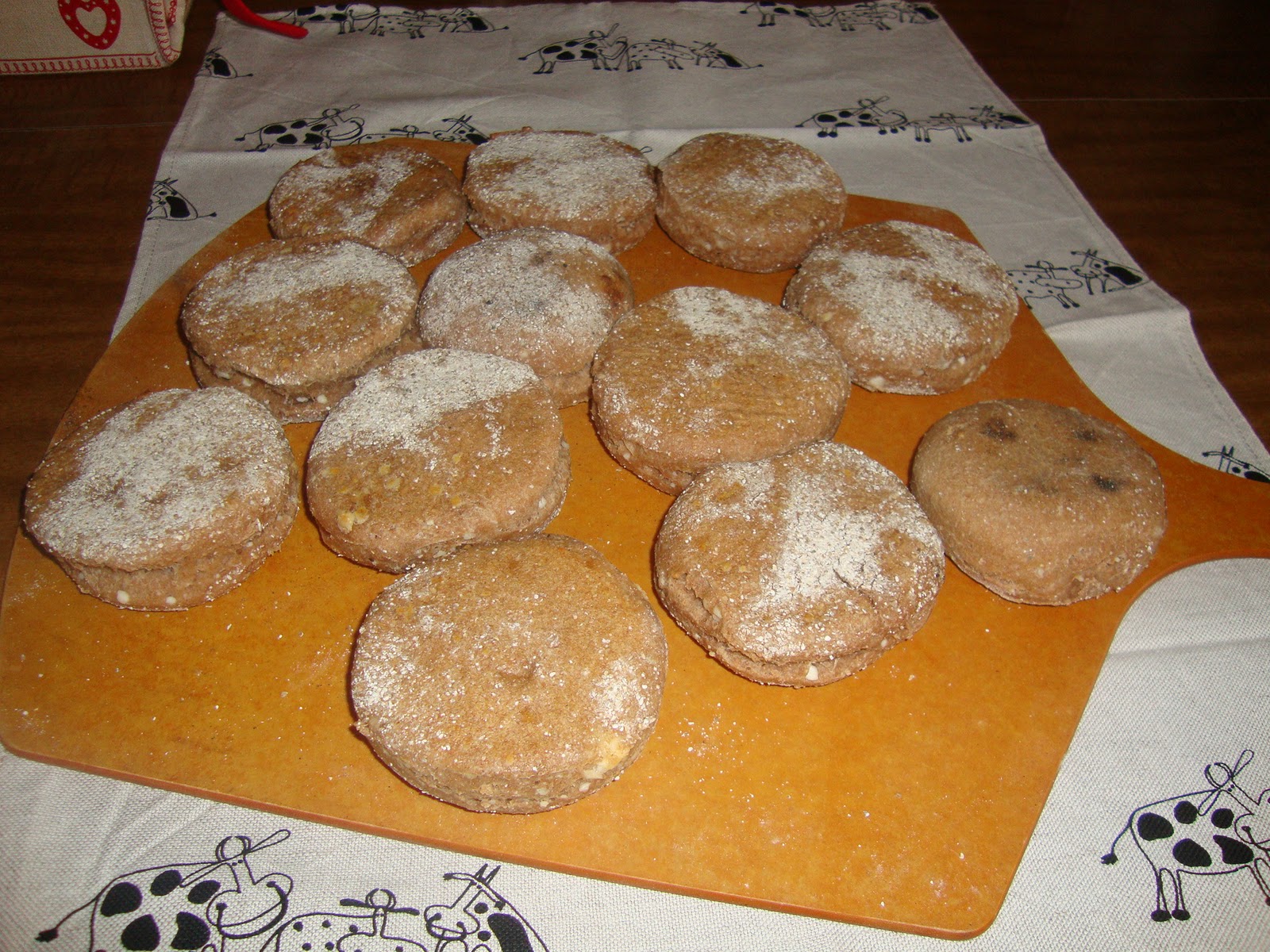
As some of you are aware, I have been experimenting for the past few weeks with various English muffin recipes in an attempt to determine what I think is the recipe that truly creates the closest thing to an authentic English muffin.  The exercise has been quite interesting and productive.  So, here's my opinion, for what it's worth.  Dan Lepard's recipe has no equal.  Mr. Lepards recipe is easy to prepare, produces terrific results and is far and away the closest to what I believe is an authentic English muffin.  I previously posted his recipe with some of my comments and measurement conversions.  The photo below is of my second batch from Mr. Lepard's recipe.  Here are some tips that I used during my second baking itereation of his recipe. 

I doubled the recipe and made something like a dozen slightly larger size muffins.

I cut the rounds for the muffins 4 1/2 inches in diameter and 1/2 inch thick.

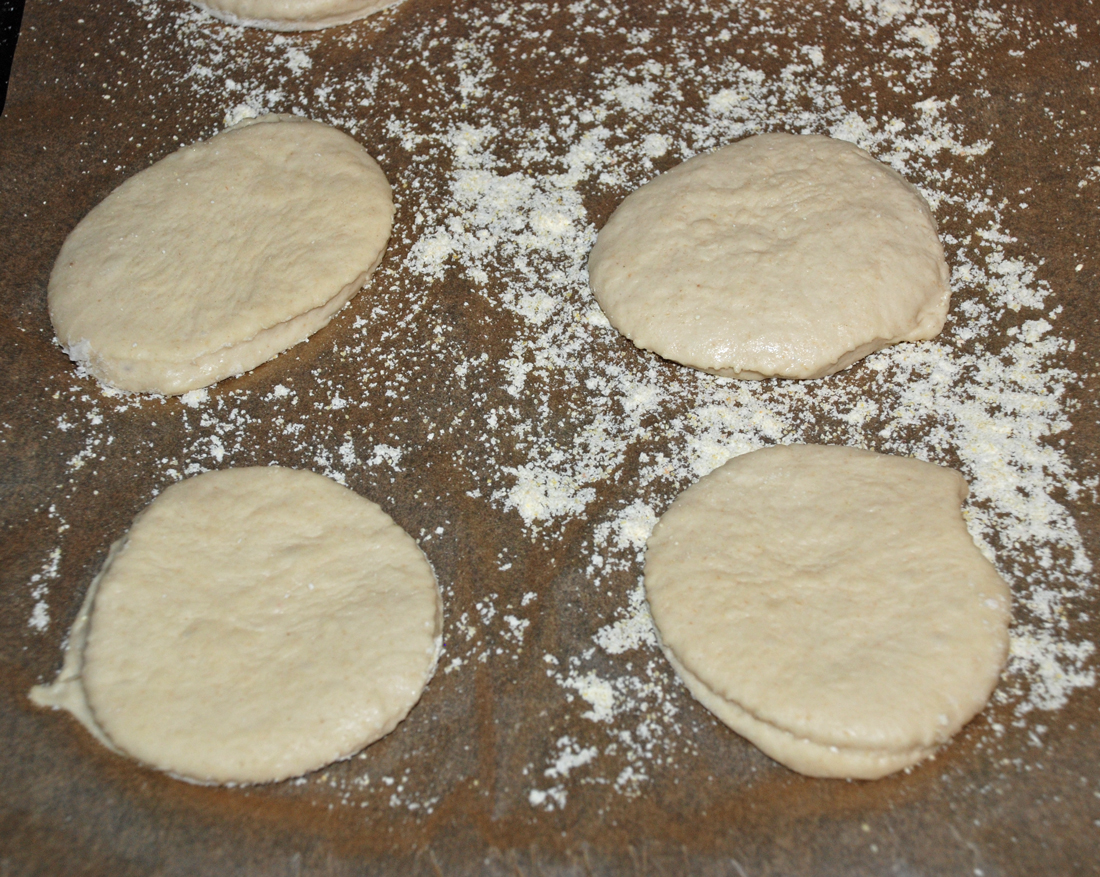
Use lots (I mean LOTS) of flour on the towel they sit on in the baking tray to proof.  Don't skimp on the flour or they'll stick to the cloth and at that point they're fully risen and very fragile, so use lots of flour.

Slide your hand under the floured towel to flip them onto your (floured) hand and place them in the skillet or on the griddle.    DO NOT try to pick them up with your fingers, spatula, etc.  REPEAT: Flip them onto your floured hand.

I reduced the cider vinegar (50ml single batch or 100ml for doubled recipe) by half (25ml for single or 50ml for double recipe) making up the difference in liquid with water and it worked great.  Just a hint of vingar, which really works well to contrast with the butter, marmalade, jelly or jam.  Incidentally, Charlene checked the Thomas English muffins package in the supermarket and they also include vinegar as an ingredient.

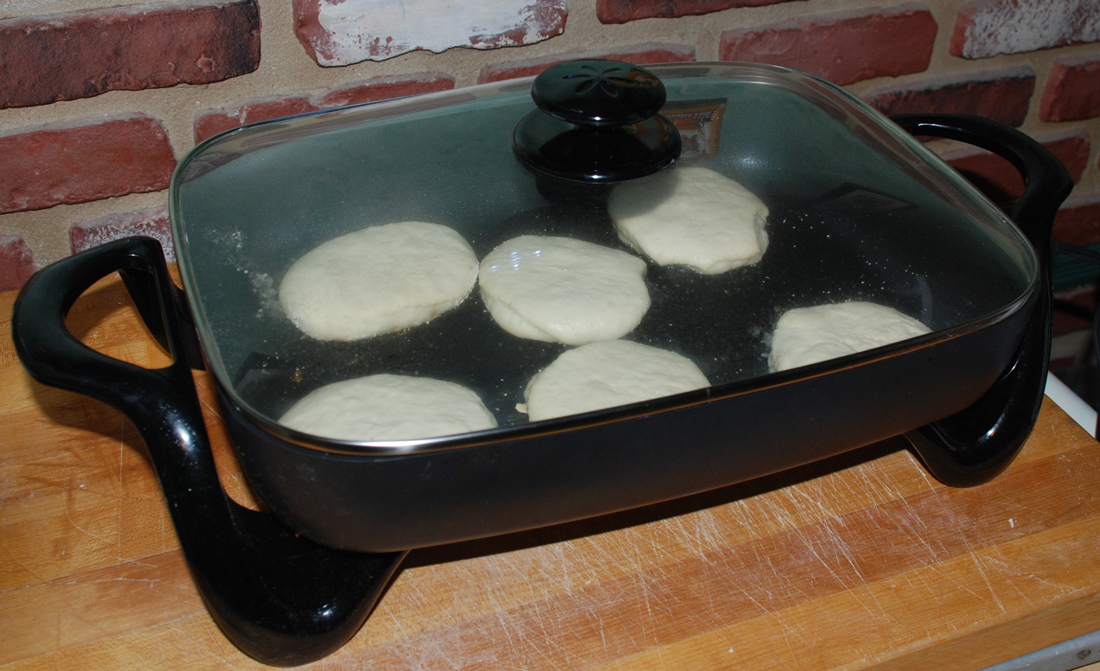
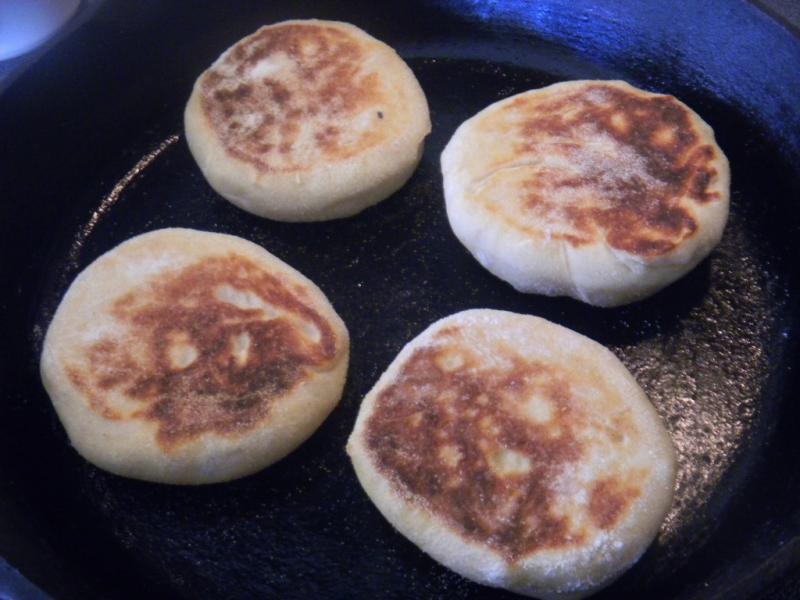
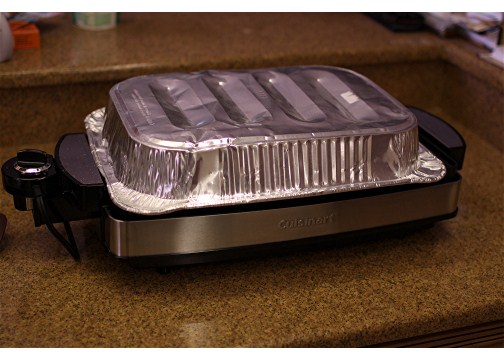
When cooking them, set your electric skillet or griddle at 300 deg. F. Cook the muffins covered (if possible) to capture the steam and hold the heat as they cook.  "Dry fry" them (no oil in skillet) for 10 minutes on side 1 and 5-7 minutes on side 2, longer if necessary.  Take a temp. check with a thermometer.  They should read 200-210 deg. F. internal temp. You can cook them in a skillet on the stove just be extremely careful with the heat under your skillet.  Otherwise, you run the risk of scorching them.
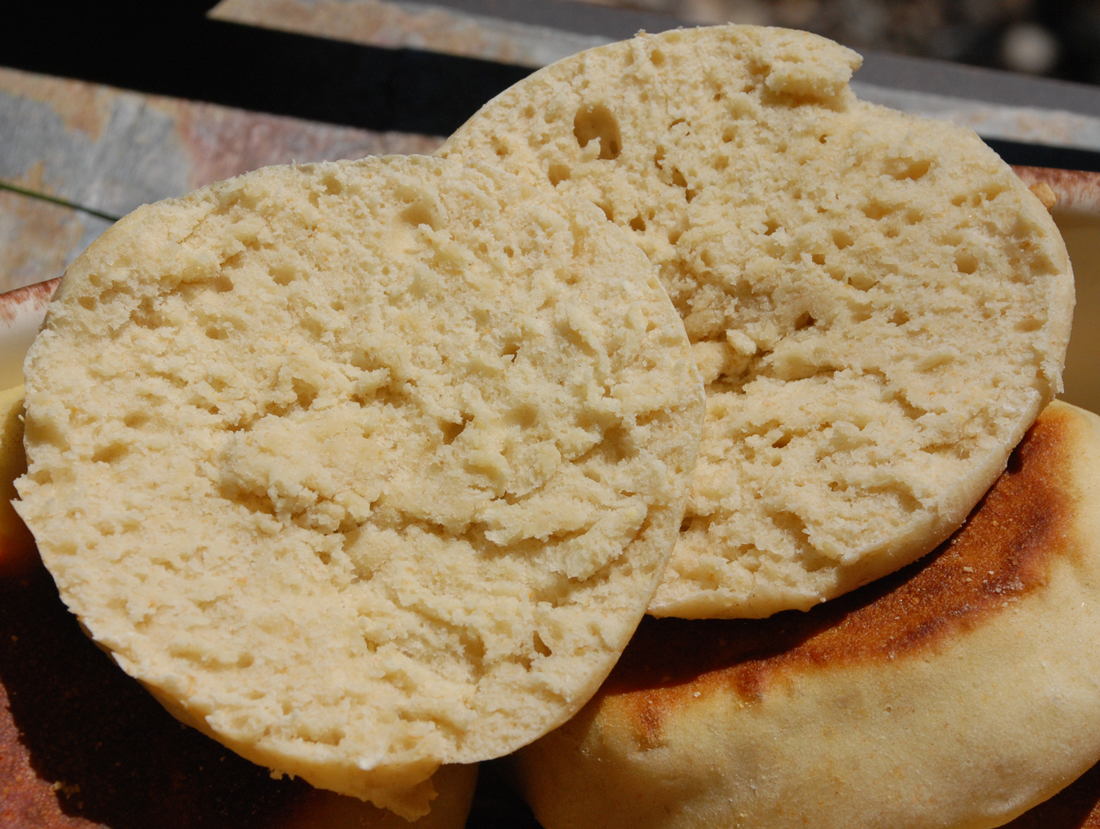
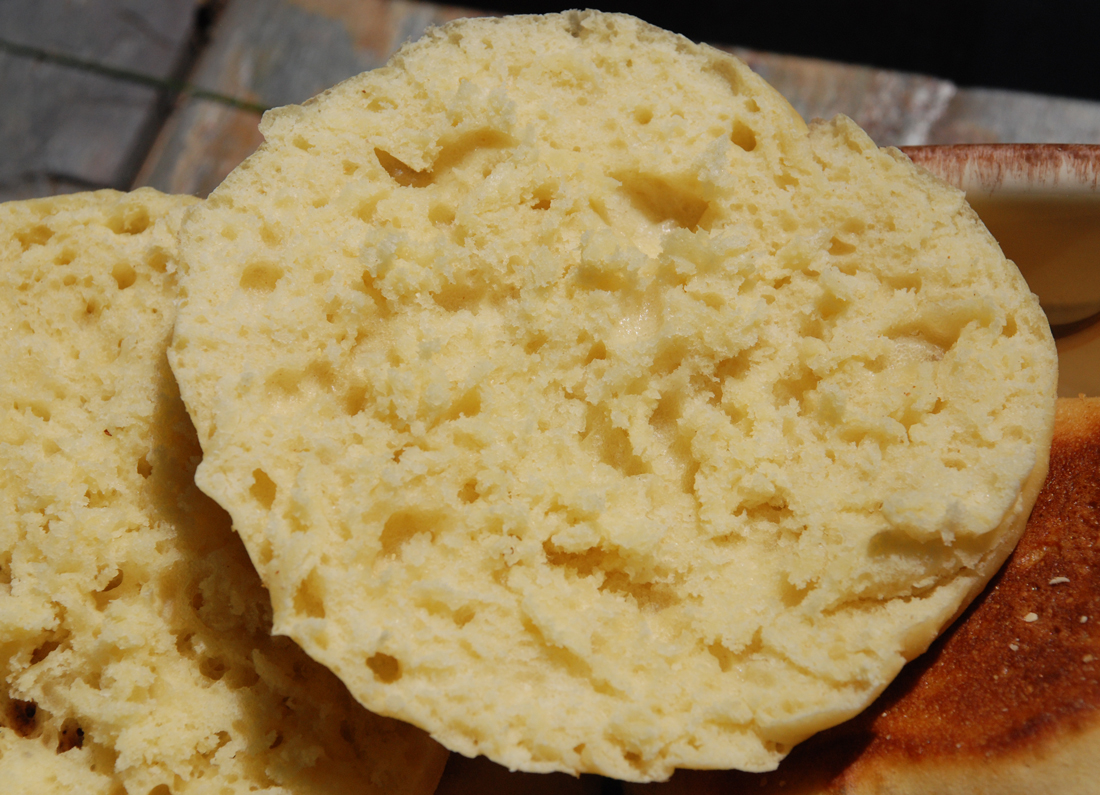
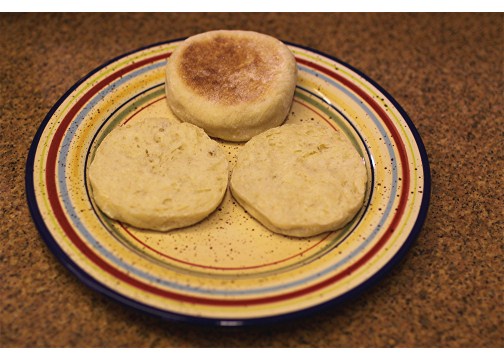
Let them completely cool on a wire rack (or they'll be gummy in the center) before serving them and split them using a fork, don't cut them with a knife.  That way you get the nice holes and great texture, as you can see from the photo below.

If you like English muffins I sincerely hope you'll try Dan Lepard's recipe... and let us know how it goes.

Howard - St. Augustine, FL


  Dan Lepard's English Muffins - Second Baking

Dan Lepard's Cider Vinegar English Muffins Second Batch


Submitted by holds99 on August 23, 2008 - 1:23pm.

Proth's English Muffins

Proth's English Muffins


Submitted by holds99 on August 20, 2008 - 3:01pm.

Dan Lepard's Cider Vinegar English Muffins


Dan Lepard has hit a home run with these English muffins.  They're what I imagine English muffins should be and, in my opinion, they're about as good as it gets.  Mr. Lepard posted a link to his recipe in The Guardian newspaper article, which I have inserted below the photo. 

I used an electric skillet to cook them.  No oil, just "dry-fry/bake".  Preheat the skillet, with the cover on to get it heated like a small oven, before placing the muffins into the skillet.  The lid goes on the skillet while they're cooking, which holds the heat nicely and allows them to steam a bit.  I followed his directions and they're very easy to make and, as I said, his recipe produces terrific muffins.  For those who like a nice sour bite, you'll really like these muffins.  The dough needs to be prepared the night before, as it has to stay in the regrigerator overnight. 

Mr. Lepard calls for 50 ml of cider vinegar in his recipe, which gives the muffins a nice crisp, slightly sour taste on the order of a sourdough.  For my taste the sourness was fine.  However, I think next time I will reduce the vinegar slightly to about 30 ml vinegar mixed with 20 ml water just to see the difference.   I took the liberty of adding/imbedding some conversion notes (without making any changes to the original recipe) i.e. ml to ounces and cm to inches, etc.  Hope it was alright to do that.  I [bracketed] my entries and italicized them so it would be clear as to what I added.  Mr. Lepard says they can be made either in rectangles or rounds.  I chose 4 inch rounds because that was the largest cutter I have.  Mr. Lepard calls for 12 cm diameters, which is close to 4 3/4 inches.  He make them large to compensate for shrinkage after cutting. As for the leftover dough, after cutting the rounds, I simply rolled it up, kneaded it a bit and rolled it out and made 2 more muffins, for a total of 9 muffins.   They're great toasted with the holes absorbing the butter and marmalade.

Dan Lepard's Cider Vinegar English Muffins

Dan Lepard's Cider Vinegar English Muffins

Cider vinegar muffins

What the Americans call an English muffin we used to call, well, a muffin. But since those little cakes in paper cases have invaded the supermarket shelves and stolen the name, our own little plain bread muffin has become neglected in Britain. In the US, bakers have raised the quality of their English muffins to something close to perfection. Crisp on the outside, sour and holey inside, and chewy when toasted and slathered with butter. Make these and you'll see what we've been missing all these years. In this recipe, the dough gets mixed and lightly kneaded the night before and is left in the refrigerator overnight to rise slowly. You can even leave it until the following evening if that works better for you.

Makes 8-10 muffins

50g unsalted butter

100ml warm water (by weight: approximately 4 oz. or 116 g.)

50ml cider vinegar [by weight: approximately 2 oz. Or 58g.]

100ml plain live yoghurt [slightly less than ½ cup]

1 large egg

1 level tsp salt

375g strong white flour

2 tsp easy-blend yeast [I used instant yeast and it worked fine]

Oil for the bowl

The night before, melt the butter in a saucepan [use stainless steel with the vinegar], then remove from the heat and beat in the warm water with the vinegar, yoghurt, egg and salt until smooth. Measure the flour and yeast into a bowl, tip [pour] in the butter and vinegar mixture and stir to a thick batter. Cover the bowl and leave for 10 minutes. Lightly oil the work surface and knead the dough gently for 10-15 seconds (see Basic techniques). Scrape the bowl clean of scraps of dough, wipe the inside with a little oil, place the dough back in the bowl, cover with a plate or cling film and place in the refrigerator overnight.

The following morning (or evening), lightly oil a dinner tray and upturn the dough on to it. Stretch and fold the dough in by thirds (see Basic techniques), then cover with a tea towel and leave to rest for 1-2 hours until it warms and begins to rise again. [It takes a full 2 hours at 75 deg. F.]

Line a dinner tray with a tea towel and dredge the surface liberally with flour. Gently roll out the dough [on a work surface] about 1½ cm [approximately 5/8 inch] thick, trying not to knock too much of the gas from it. Cut the dough into discs using a 12cm-diameter [approximately 4 ¾ inches] cutter (yes, that large, as they'll pull inwards as they bake), or take a sharp knife and cut the dough into 6 rectangles or something close to that. Carefully lay the cut dough on the floured cloth. Dust the tops with flour and cover with a tea towel. Leave for 1½-2 hours [they’ll take the full 2 hours at 75 deg. F.] or until doubled in height.

Get a large heavy-bottomed frying pan with a snug-fitting lid if possible. Place on a moderate heat until the surface is hot but not scorching.

Uncover the muffins and flip them one by one on to your hand with the cloth, then slide them into the pan. You should be able to fit 3 or 4 in at a time. Cover the pan with the lid to create a bit of steam to help them rise and cook for 2-3 minutes.  Then check to see that they're not burning. If the bottom is a good brown, flip them over using a spatula. Cook on the other side for about 3-4 minutes. [I used an electric skillet with a lid, set at 340 deg. F. cooking them in a dry pan for 6 minutes on side 1 and 4 minutes on side 2 until they reached an internal temperature of 190 deg. F.] When done, remove to a wire rack, drape a tea towel over to keep them soft, and continue with the remaining muffins. Freeze in a zip-lock bag as soon as they're cold.

Variation

Crispy bacon muffins

Add 250g smoked streaky bacon, cooked until crisp and chopped finely, in with the flour, then continue with the recipe above.


Submitted by holds99 on August 20, 2008 - 2:21pm.

Dan Lepard's Cider Vinegar English Muffins

Dan Lepard's Cider Vinegar English Muffins


Submitted by holds99 on August 18, 2008 - 10:51am.

Rose Levy Beranbaum's English Muffins


For my first attempt at English muffins I decided to try Rose Levy Beranbaum's recipe from her Bread Bible.  The recipe uses a sponge/poolish and is an enriched (with butter and honey) dough.  I followed her recipe to the letter, except for diameter size.  After mixing I placed the dough in the fridge overnight for retardation.  She says it can stay in the fridge up to 24 hours. I left it in for about 12 hours.   The recipe calls for rolling the dough out while it is cold and cutting round 3 1/2 inch diameter  rounds (I cut them 4 inches in diameter).  Place them on a pan sprinkled with corn meal and sprinkle the tops lightly with corn meal, then allow them to rise (covered) until double in volume.

 Rose Levy No. 1Rose Levy Beranbaum's English Muffins: Rose Levy No. 1

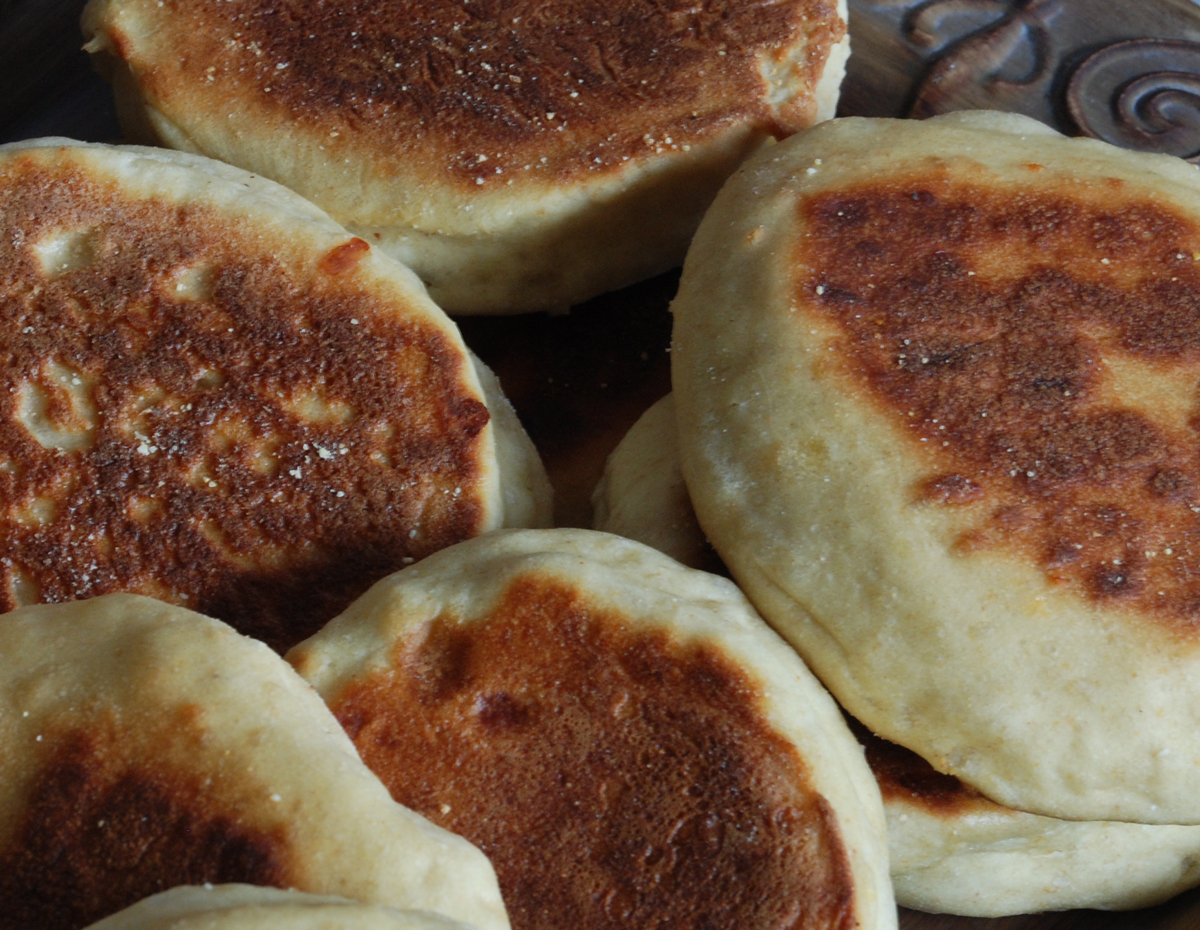
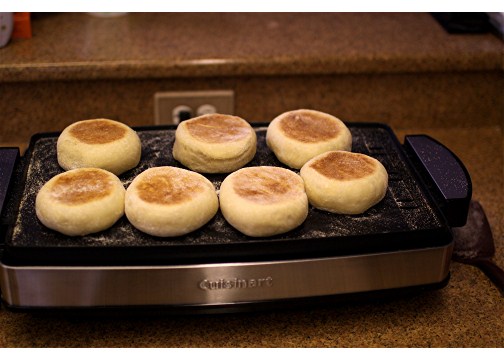
Photo below: Then place each dough round on a lightly buttered, griddle heated to medium.  Cook on one side for 10 minutes, flip them over and cook on the other side for about half previous time (5 minutes) until they reach an internal temp. of 190 deg. F 

 Rose Levy No. 3

Rose Levy Beranbaum's English Muffins: Rose Levy No. 3

Photo Below: The front 2 rows are the tops (after being flipped and cooked 5 minutes).  The back 2 rows are the bottoms (after cooking for 10 minutes).

  Rose Levy No. 3

Rose Levy Beranbaum's English Muffins: Rose Levy No. 3

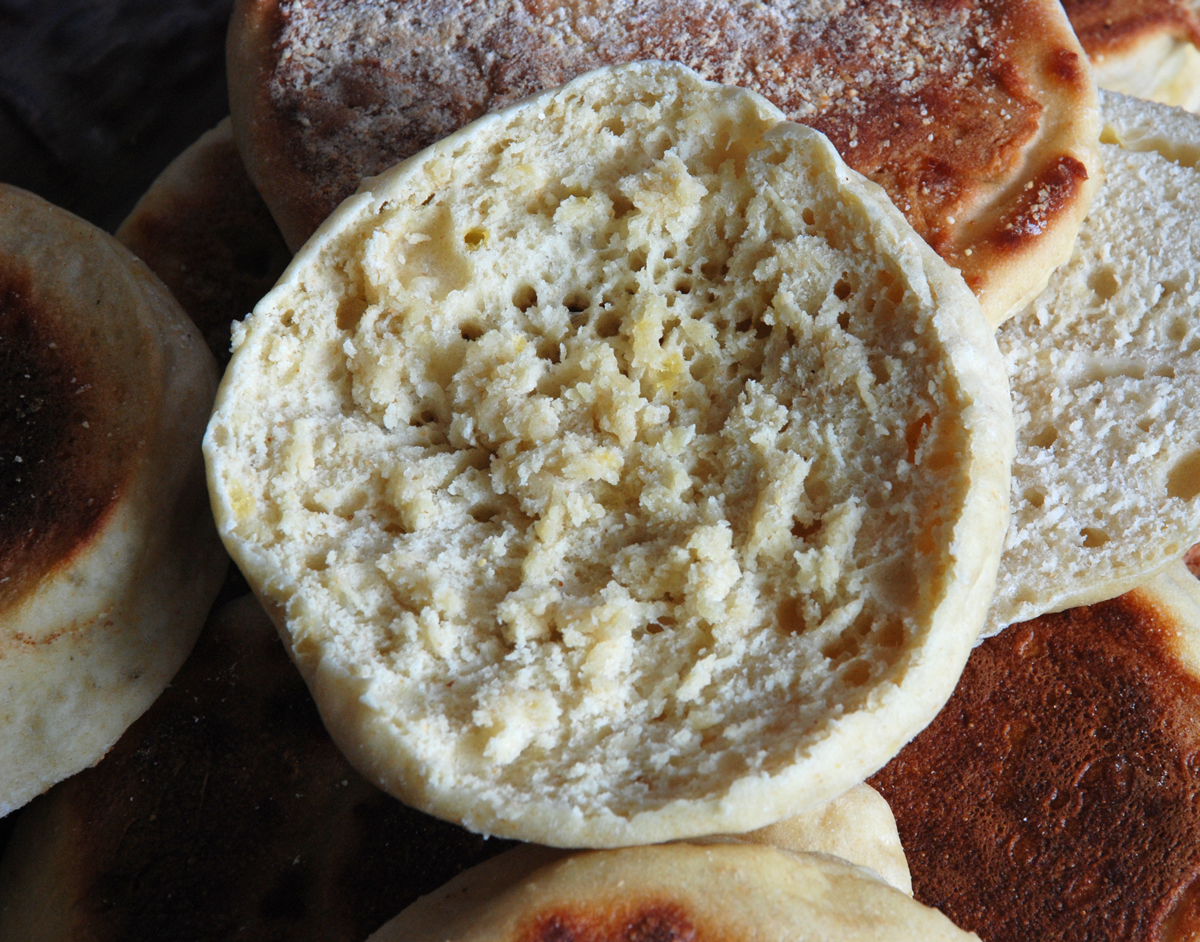
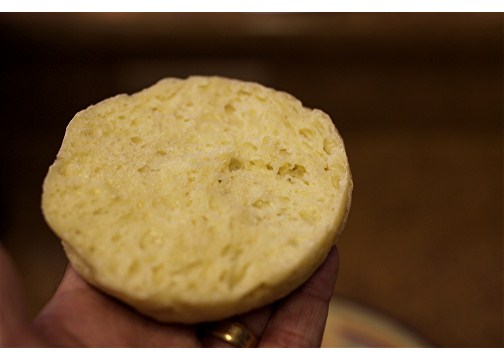
The photo below is the crumb of the muffin.

 Rose Levy No. 4

Rose Levy Beranbaum's English Muffins: Rose Levy No. 4

Summary

In the opening passage of her recipe she says: "This incredibly smooth and supple dough is almost identical to the one for Basic Soft White Sandwich Loaf (page 244).  Therein lies the problem. The muffins DO NOT resemble English muffins with the firm texture and craggy holes in the crumb.  The crumb was way too doughy and more like the texture of Wonder Bread than English Muffin. 

With all due respect to Rose Levy, who I think has written a terrific book (Bread Bible), which I bake from frequently---I would be less than honest if I didn't say strike this one from your "To Bake" list.

Dougal has posted a version of Dan Lepard's recipe for crumpets that I plan to try next.  Thank you Dougal.  I'll keep you posted.


Submitted by anarista on August 1, 2008 - 2:55am.

Looking for a recipe

I am new to the list and haven't been able to find where I can post to the list until today. I am looking for proth5's English muffin recipe as the family wants the muffins to have a big nooks and crannies which the recipe I have now doesn't do. Thanks


Submitted by weavershouse on July 30, 2008 - 6:11pm.

English Muffins and Pagnotta

English MuffinsEnglish Muffins

After seeing proth5's muffins I had to try them hoping to get the nooks and crannies. I messed up totally when I tried to convert the recipe to kg so ended up guessing. After several stretch and folds I let it rise for about 1 1/2 hour. It was full of big bubbles by then and I thought I want lots of holes so why should I deflate this thing and roll out all the air bubbles. I just gently turned it out on a floured board and gently pulled it out till it was about 1 1/2 - 2" high and just cut with an inverted drinking glass. I put them on cornmeal and then right onto the hot skillet still full of air bubbles, no rise time. I didn't use rings. I was happy to see all the "butter bowls" inside. I hope I can repeat the whole thing, mistakes and all. I ended up with 18. I doubled the recipe but should have ended up with 12. Oh well. Thanks proth5 for the inspiration. They toast up great.


My photo is very bad.


PagnottaPagnotta


Bill Wraith's Pagnotta

Today I also made Bill Wraith's Pagnotta. This bread always works well. I was on the phone when these were proofing and they went too far. I was worried they would deflate but they didn't, they just baked into each other so I'll have to pull them apart when they cool. The recipe can be found in the SEARCH. Hope you see these Bill so I can say thanks for your recipe.


Submitted by proth5 on July 25, 2008 - 5:33pm.

Crooks and Nannies

No wait, strike that – reverse it.


Summer is here and it’s too hot to fire up the oven which makes it a perfect time to take the electric griddle outside and make English muffins.


The problem, of course, is getting those great nooks and crannies.  My old formula and technique got me plenty of little holes in the muffins, but not those great nooks and crannies (well, the little holes caught the melting butter, but still, the drive for “just a little better” is strong.)


So I thought about both my formula and my technique.


I was using an adaptation of the King Arthur “English Tea Cakes” recipe which calls for beating the dough for 5 minutes in a mixer.  I thought about “Batter Whipped” bread and how beating the dough caused its fine texture.  Then I thought about baguettes.


Well, English – French, different, but in the end – all European.  So I thought I would adapt my baguette technique for my English Muffins.


I use King Arthur All Purpose flour.

Makes about 6 

The formula:


Levain Build

Starter    .65 oz (100% hydration)

Flour      .95 oz

Water     .95 oz


Let ripen overnight.


Final Mix

All of the levain build

Flour                9.25 oz

Salt                   .16 oz

Dry Milk         1.25 oz

Sugar                .55 oz

Vegetable oil    .55 oz

Water              9.25 oz


Mix to a loose batter.  Four times at 30 minute intervals, stir 30 strokes with a spoon or spatula.


Let rise until domed and bubbly.  Do not let it collapse.  This particular batch took about 3 hours at this phase.


Baked in greased muffing rings on a lightly greased griddle at 325F.  8-9 mins per side.


The results. 

(I'm no photographer - that's for sure...) 

Finally the nooks…


Submitted by russelpolk on June 19, 2008 - 6:26pm.

English Muffin from Bread Baker's Apprentice

I just made some dough for English Muffins from Reinhart's "Bread Baker's Apprentice".  The ingredients were:

10 oz flour

1/2 tsp sugar

1/4 tsp salt

1 1/2 tsp instant yeast

1 Tbsp shortening or unsalted butter (I used shortening)

3/4 to 1 cp milk room temp

I mixed it like it said, and kneaded it.  Now, I don't know the proper term for it, but when I turned it out to knead it, it just shredded.  It did hold together, but there was no way I was going to get a skin to form or pass the window test.  It just broke apart when I tried.  Any ideas?  I have made it twice and it has turned out the same both times.