Submitted by dmsnyder on September 6, 2008 - 9:05pm.

Philippe Gosselin's Pain à l'Ancienne (according to Peter Reinhart, interpretted by dmsnyder, with modifications)


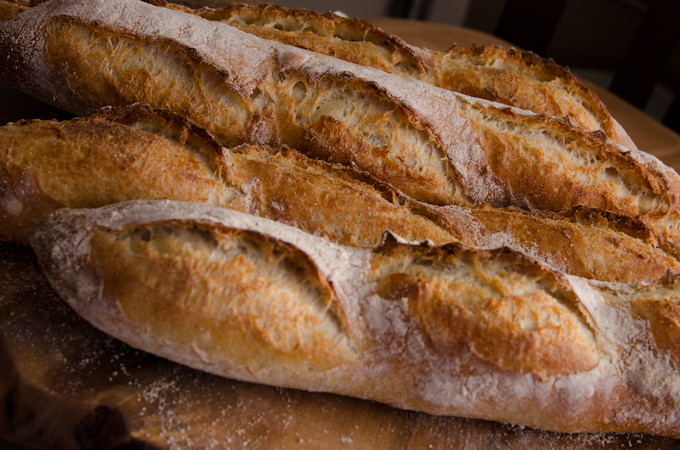
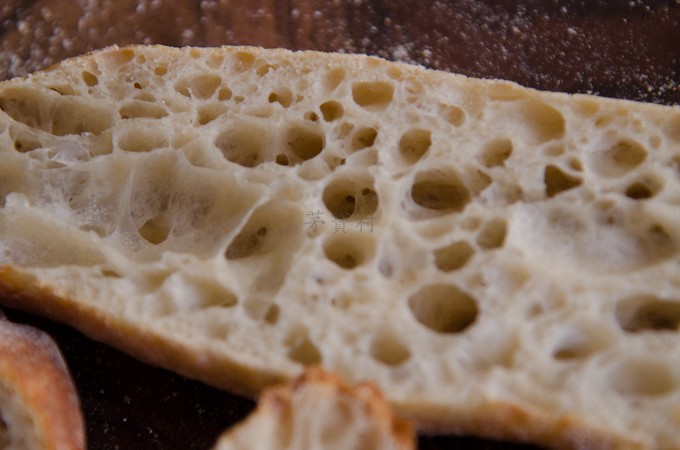
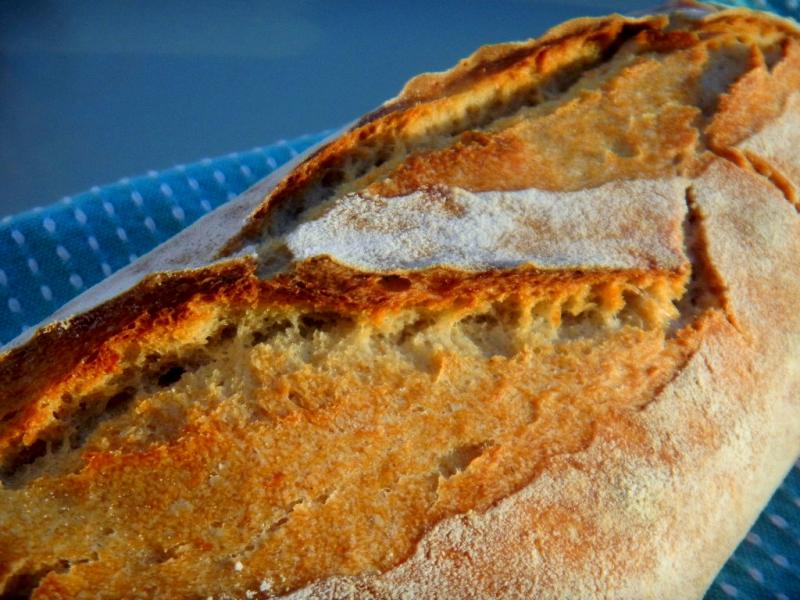
Gosselin Pain a l'Ancienne

Gosselin Pain a l'Ancienne

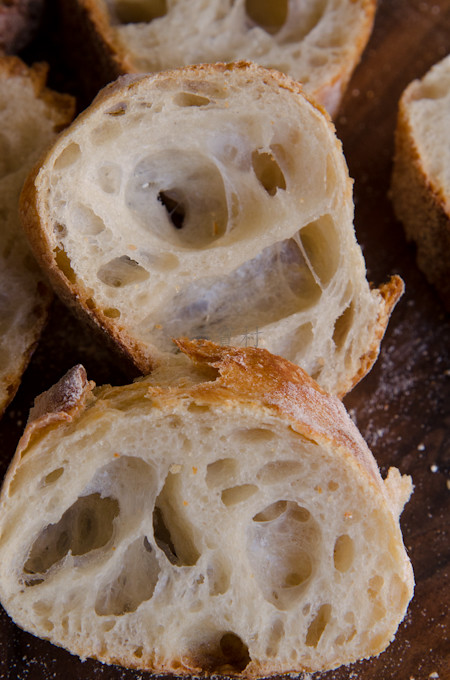
Gosselin baguettes

Gosselin baguettes

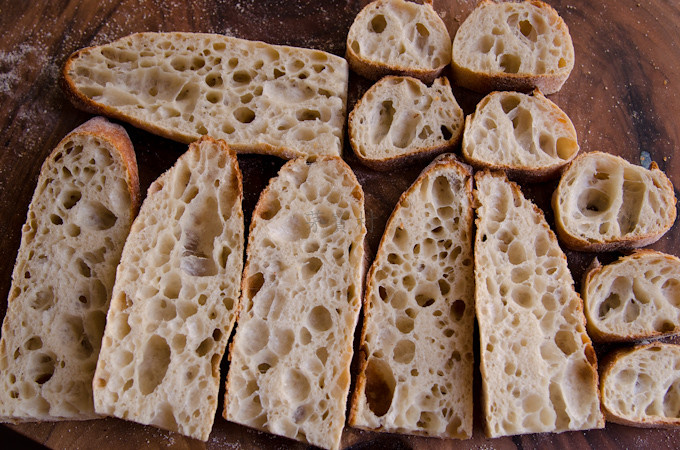
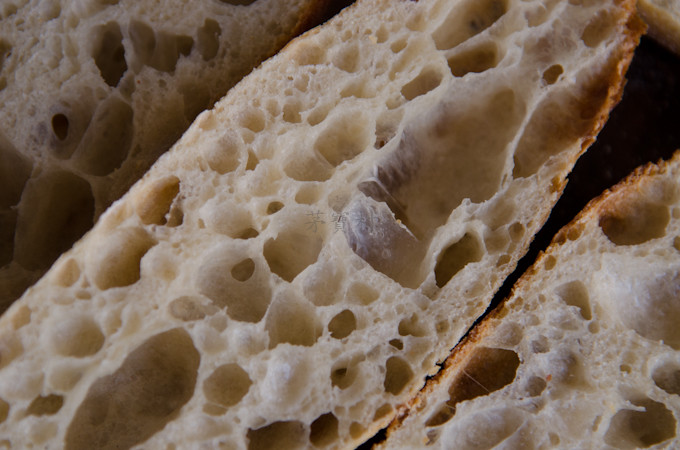
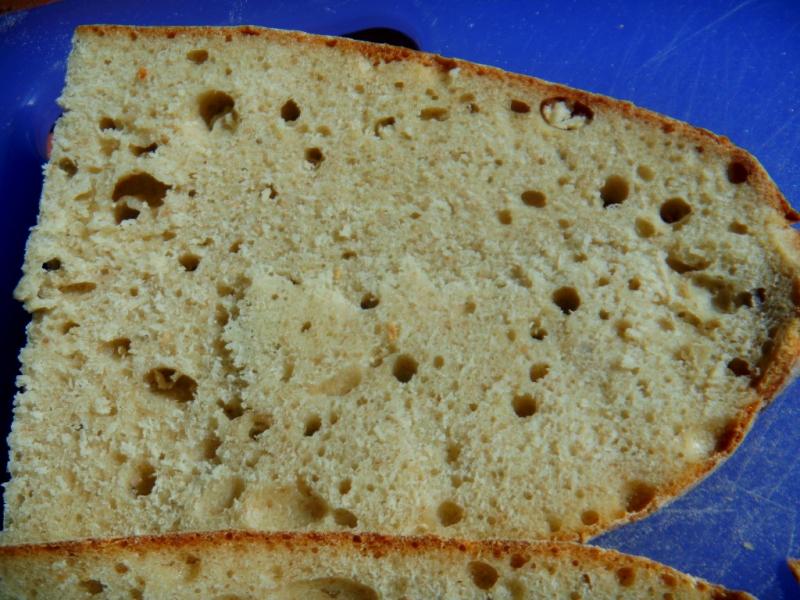
Gosselin baguette Crumb

Gosselin baguette Crumb

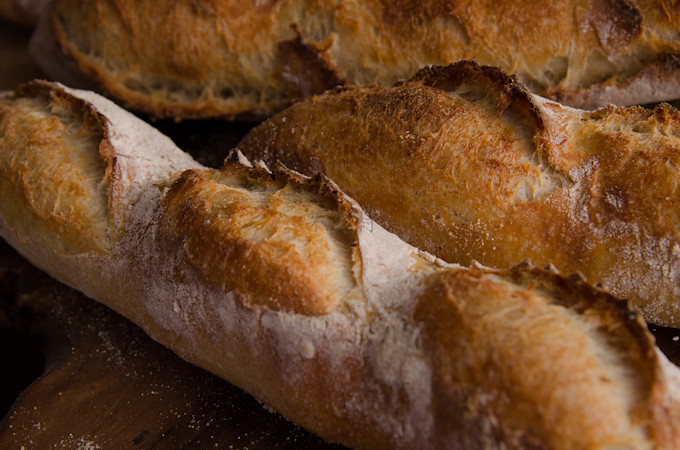
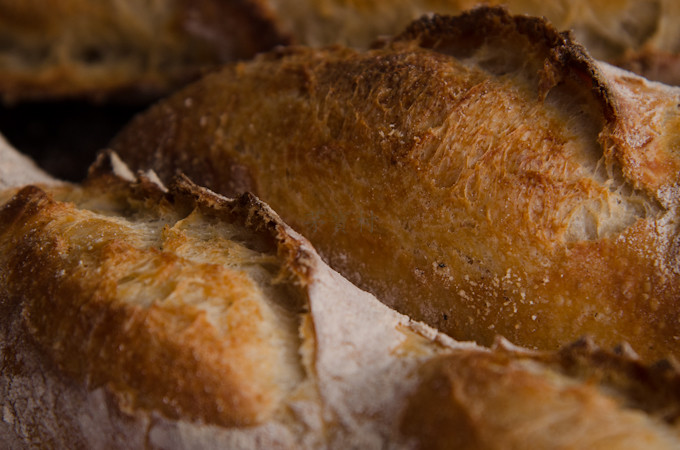
Gosselin Pain Rustique

Gosselin Pain Rustique

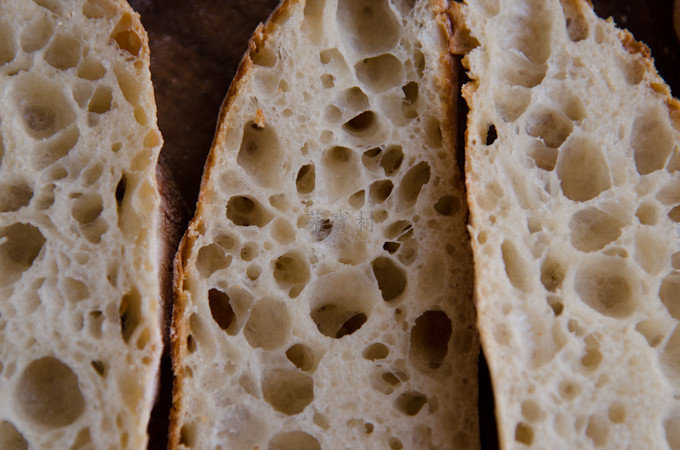
Gosselin Pain Rustique Crumb

Gosselin Pain Rustique Crumb

Both Peter Reinhart's "Bread Baker's Apprentice" (BBA) and Daniel Leader's "Local Breads" contain formulas for "Pain à l'Ancienne," based on the explorations during the 1990's by several Parisian bakers of lengthening bulk fermentation to achieve improved flavor. Of course, these techniques could not have been used in the "old days" that the name of the bread implies. Bakers devoted to this new technique use modern refrigeration which was not available to their ancestors.

Reinhart based his version of pain à l'ancienne on that of Philippe Gosselin. In BBA, Reinhart describes Gosselin's method in very general terms and then says the formula he provides is modified to make it easier for home bakers. In January, 2003 Reinhart sent a message to an internet mailing list which contained a detailed enough account of what Gosselin told him to write a formula. For me, the original formula did not seem more difficult than the one Reinhart published. This is because I almost always bake on weekends when I can accommodate my activities to the original formula. So, I thought I would give it a try. My interpretation of Reinhart's interpretation is as follows:

Pain à l'Ancienne of Philippe Gosselin, as described by Peter Reinhart

Flour.......................500 gms

Water......................375 gms

Salt.........................8.75 gms-

Instant yeast...............5 gms

Mix the flour with 325 gms of ice cold water and refrigerate overnight.

The next day, remove mixture from refrigerator. Add yeast, salt and another 25-50 gms of cold water and mix thoroughly for 4-6 minutes.

Ferment at room temperature until doubled in bulk (up to 6 hours).

One hour before baking, preheat oven to 460F.

Divide into 4 equal piece and gently pre-shape into torpedos.

Rest dough 10 minutes.

Shape into baguettes by stretching to 12-14 inches, score and bake immediately with steam at 460F.

The breads I made today used the following modification and extrapolations:

1. I used 50 gms of Guisto's rye flour and 450 gms of KAF Bread Flour.

2. After the long "autolyse," I mixed the flour and water with 30 gms of additional water, the yeast and the salt. The autolysed dough had moderate gluten development already and didn't want to take in the additional water with hand stirring, so I did the best I could with a scraper, then mixed in my KitchenAid with the paddle for about 3 minutes, then the dough hook for another 3 minutes. I then transferred the dough to a 2 quart glass pitcher and used Hamelman's in-the-bowl stretch and fold technique - 20 folds, 3 times at 20 minute intervals over the first hour. I then let the dough rest, covered, until doubled.

3. Gosselin's instructions to Reinhart indicated the dough would take 6 hours to double. In my (warm) kitchen today, it doubled in 4 hours.

4. I emptied the dough onto a flour-dusted board and dusted the top. I divided the dough into 3 parts. I pre-shaped the two smaller ones into rectangles and folded each long side to the middle and sealed the seams. Those, I rested with the seams down for about 10 minutes then stretched into "baguettes" and placed them on floured parchment paper. The larger piece was just cut in half to make pain rustique, rested and similarly placed on parchment.

5. I baked at 460F with steam on a pizza stone. After 7 minutes, I removed the loaf pan and skillet and continued to bake for a total of 20 minutes. I then turned the oven off, cracked it open, and left the loaves on the stone for an additional 5 minutes.

Comments

These breads had a nice, crunchy crust and an open, tender, somewhat chewy crumb. The taste was classic sweet baguette - as good as I have ever made. My wife liked it, but said she preferred the taste of the Anis baguettes with sourdough added. No surprise, as we are both partial to sourdough breads.

I was concerned that the pre-shaping of the baguettes, which Reinhart does not call for in his adaptation of Gosselin's formula, would decrease the openness of the crumb too much. It was more open than I expected. I guess I have learned to handle dough gently enough. On the other hand, it would be worthwhile to try making baguettes with this method but just cutting the dough and stretching it, without any other shaping, to see if the crumb would be even more open.

If your baking schedule allows for Gosselin's method, I would certainly recommend you give it a try. In my hands, it makes very fine baguettes.

The pains rustique require no forming, and are essentially like ciabattas. Reinhart says this dough can also be stretched into a circle or rectangle and used for pizza. I have not tried that and would be interested in hearing from anyone who does so.

David


Submitted by foolishpoolish on August 22, 2008 - 4:47pm.

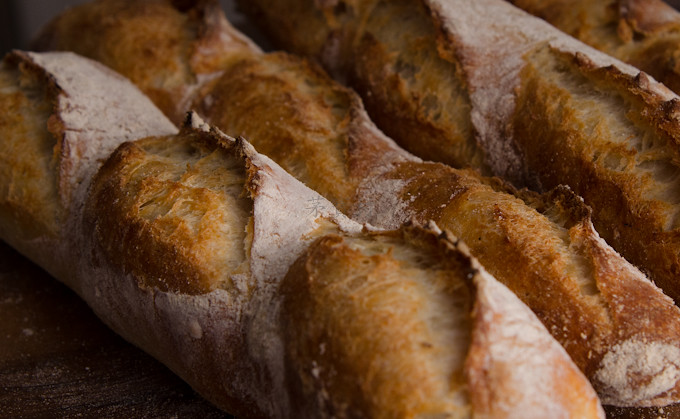
FP Baguette au Levain 2

FP Baguette au Levain 2


Submitted by foolishpoolish on August 22, 2008 - 3:08pm.

Baguette au Levain (sans levure commerciale)

la grignela grignela miela mie

Some pics from the latest baguette test batch. I'm still finalising the recipe and trying to weigh up the pros and cons of various fermentation strategies but I feel it's finally getting there....

Hopefully a full post soon. 

FP 


Submitted by foolishpoolish on August 22, 2008 - 3:03pm.

FP Baguette au Levain 3

FP Baguette au Levain 3

la mie


Submitted by foolishpoolish on August 22, 2008 - 3:03pm.

FP Baguette au Levain 2

FP Baguette au Levain 2

la grigne


Submitted by foolishpoolish on August 22, 2008 - 3:02pm.

FP Baguette au Levain 1

FP Baguette au Levain 1


Submitted by funkdenomotron on August 6, 2008 - 11:13pm.

the new guy takes aim

Greetings! Wanted to create a blog, and give a bit of history and aspirations. I have looked over this site a few times and finally decided to join. I am 31, I have been baking for almost 2 years. I was an army brat, and grew up in Frankfurt and Stutgartt. I first started with pretzels, and have come up with a realy good simple recipe that can be made with packaged yeast or starter. I live in south florida now though, and I'm not so sure the wild yeast here is quite up to snuff. Perhaps the heat and humidity play a role, the first batch and second batch yield a good bread, but the starter then tends to sour too much and turn into a grey lump of bla. I am also quite the avid ametuer chef, and take pride in measuring nothing. This is not a skill that is transferrring well to baking breads. I have been trying to bake a good baguette. Traditionally I have started with my yeast and warm water, then add slowly the flour, of course type depends on what I want, until I get a good dough. But there are books that say to measure and add all at once. There are books that say to knead vigorously for 8 min. There are books that say to knead lightly for 15 min. Some say to add the salt last, some immediatley. Some want a cold rise, some want a warm rise. Some want 3 rises, some want 1. To spray or not to spray? So I will be interested in some recipes and techniques, and I will try and figure out what i am doing when i make pretzels and post. Aufwiedersehen!      


Submitted by BaguetteQuest on July 6, 2008 - 10:45am.

A Thicker Crusted Baguette? - Help wanted


Hello Fellow Bread Bakers,

I've seen some great looking bread on here. This is a great site. I really enjoy the challenge of bread baking and knead all my bread by hand. I think I always will. Not only is it really fun and my favorite part, but great exercise.

I am in search of the best homemade Baguette. True artisan style. I am longing for the kind of taste and texture you would get if you bought a warm fresh loaf in a Paris bakery, or at least as close as I can get. 

I have been experimenting and learning more and more about the personality bread has.
I am interested in getting a thicker crust on my baguette. About half an inch if possible. I also would appreciate any help on getting the large irregular holes a true baguette should have.
Professional "Tried and True" methods are preferred, but if any of you have experience in this area, your help would be appreciated.

My view of the perfect Baguette:

  1. Half inch thick crisp crust
  2. Golden brown
  3. Network of large irregular holes
  4. Soft crumb
  5. A great strong sourdough taste

Thank you in advance, for any help you can give, BaguetteQuest


Submitted by obrien1984 on July 4, 2008 - 5:29am.

Difference in two baguette recipes

After baking whole-wheat and rye breads exclusively for about six months, I decided this weekend to try my hand once again at the elusive baguette. I returned to my old, trusted source, Dan Leader's Bread Alone, but also consulted the all-wise Internet, just to refresh my memory on all the tips and tricks to getting the perfect baguette.

That's when I ran across this recipe at the King Arthur site. The pictures at the top of the PDF were so exquisite that I wondered if, perhaps, I had come across the Holy Grail of French Stick recipes. I compared it to Leader's recipe, and after figuring out the baker's percentages, I discovered they were almost identical except for two points.

First, the KA recipe calls for using 100% of the prepared poolish in the final dough, whereas Leader's calls for 1/2 the poolish, but makes it up with more flour and water. Not so big a deal, in my opinion. I would rather not waste all that poolish anyway. 

However, the second difference was a big one: KA's recipe called for over FOUR TIMES as much yeast in the final dough. It works out to be about 1.5 tsp, whereas Leader's recipe calls for 1/4 tsp (1/2 tsp if it's moist yeast). Even the percentage of salt is the same.

So, I guess my question is, who's right? And I'm sure the answer will be, "whatever works for you!." Still, I can't help but wonder why there is such a difference in yeast quantity in otherwise similar recipes. Is it possible that the KA recipe over-compensates for the possibility of weak yeast? Does the extra yeast even make a difference over the course of three hours? Perhaps they are keeping up their sales? Or maybe they're using a different kind of yeast? Perhaps I'm looking into this way too deeply!

I would love to hear some opinions on this. What do you folks think?

Happy Baking! (And Happy Independence Day for those of you in the States!)

Joseph 


Submitted by SteveB on July 1, 2008 - 1:22pm.

More on Baguettes


With all the recent discussion on making baguettes, I thought some of you might be interested in a recent posting about baguettes on my brand-spankin'-new bread blog:

 http://www.breadcetera.com/

 - SteveB